How Is Technology Used in Sports? 10 Practical Examples
- David Bennett
- Aug 10
- 9 min read

How is technology used in sports to improve performance, decisions, safety, and fan experiences?
Technology in sports is used to capture movement, turn video and sensor data into insight, rehearse difficult situations, support officials, protect athletes, produce richer broadcasts, and create more personal fan experiences. The most valuable systems do not simply add devices; they make a specific sporting or commercial decision faster, safer, clearer, or more repeatable.
This practical guide answers a popular question with real-world applications for teams, academies, federations, venues, rights holders, and brands. It complements the broader Mimic Sports technology guide by focusing on how the tools are actually used, what value they create, and how organizations can choose a sensible starting point.
Table of Contents
What Does Technology in Sports Mean?

Technology in sports means the tools, software, data systems, digital environments, and production methods used across athletic performance and the wider sports business. It includes familiar equipment such as timing gates, heart-rate monitors, GPS trackers, replay systems, and broadcast cameras. It also includes computer vision, artificial intelligence, virtual and augmented reality, 3D simulation, digital twins, cloud production, mobile platforms, and interactive digital athletes.
The definition is broad because sport is an ecosystem. A performance department may use technology to measure sprint mechanics or manage training load. A coach may use synchronized video to explain spacing. A referee may use goal-line or replay evidence. A venue team may model crowd movement. A broadcaster may add live graphics. A sponsor may build an interactive activation. Fans may use a second-screen experience that responds to the match in real time.
A useful way to understand sports technology is to group it by the decision it supports. Measurement technologies capture what happened. Analytics technologies organize evidence and reveal patterns. Simulation technologies let people test what could happen. Communication technologies turn insight into feedback or content. Experience technologies help audiences participate. The Mimic Sports 3D simulations service connects several of these layers by creating repeatable environments for training, visualization, campaigns, and interactive experiences.
The technology itself is rarely the outcome. A wearable is valuable only when its measurements are reliable and staff know how to act on them. A dashboard is useful only when it fits the timing and language of a coaching meeting. A virtual experience matters only when fans understand what to do and the brand can measure meaningful participation. The right question is not “Which tool is most advanced?” but “Which problem needs a better decision or experience?”
Capture: video, position, movement, load, biometrics, events, audio, and audience behavior.
Interpret: analytics, AI, visualization, comparison, alerts, and expert review.
Rehearse: VR, AR, 3D simulation, digital twins, and scenario testing.
Communicate: coaching feedback, broadcast graphics, digital content, and fan interaction.
Act: adjust training, tactics, safety procedures, production, sponsorship, or service design.
How Is Technology Used for Athlete Training and Performance?

In athlete development, technology helps staff see details that are difficult to observe consistently at full speed. Video analysis can break a movement or tactical sequence into reviewable moments. Computer vision can estimate player and ball positions, identify events, or automate repetitive tagging. Motion-capture systems can describe joint positions and segment movement. Wearables can record external load, acceleration, orientation, heart rate, or other signals when used within appropriate sporting and medical governance.
Teams combine these sources to answer narrow questions. Is an athlete repeating a technical fault under fatigue? Does a pressing unit leave the same passing lane open? Has a player’s high-intensity exposure changed relative to their own baseline? Are training tasks reproducing the visual and decision demands of competition? The computer vision in sports guide and the sports motion capture guide explain how capture becomes practical analysis.
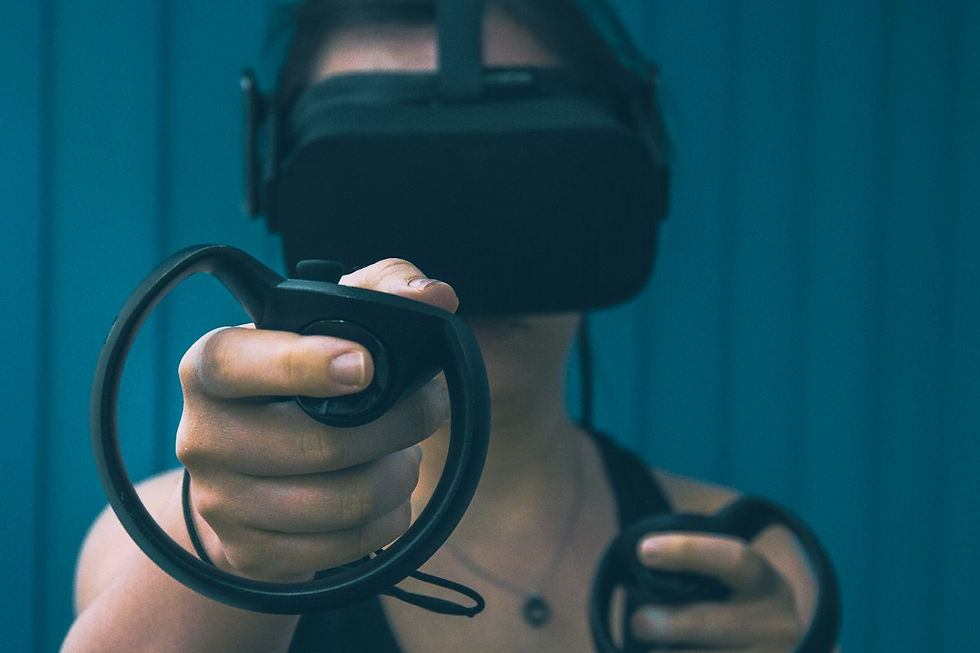
Virtual reality and 3D simulation add a different advantage: controlled repetition. An athlete can rehearse recognition, timing, positioning, or decision cues without needing a complete live scenario every time. A goalkeeper can review patterns, a quarterback can practice reads, a striker can experience defensive shapes, or an official can rehearse rare incidents. The simulated task must represent the variables that matter; visual spectacle without decision relevance produces limited transfer.
Artificial intelligence can reduce manual work and help prioritize review. It may surface clips matching a tactical pattern, compare repeated movements, flag unusual workload changes, or organize large libraries of sessions. The AI sports training systems guide shows how measurement, analysis, feedback, and simulated practice can form one workflow. AI should support professional judgment, not turn uncertain signals into automatic medical or selection decisions.
The strongest performance systems close a feedback loop. Staff define the behavior, capture relevant evidence, review it with the athlete, design a targeted intervention, and measure the next attempt. Technology makes the loop faster and more consistent, but coaching quality, athlete understanding, consent, and context remain decisive.
Start with one observable behavior or decision, not a general promise to “use data.”
Compare athletes with appropriate role, age, competition, and individual baselines.
Synchronize video, events, tracking, and session context before drawing conclusions.
Use simulation for safe, repeatable practice and validate transfer on the field.
Explain what is collected, who can access it, and how it may influence decisions.
How Does Technology Improve Officiating, Safety and Strategy?

Officiating technology gives decision-makers access to evidence that the human eye may miss in real time. Goal-line systems, photo finishes, ball tracking, timing systems, sensor-assisted boundaries, and video review can clarify defined events. Their value depends on transparent protocols: which incidents are reviewable, what evidence threshold applies, who makes the final call, and how quickly the process must conclude.
Technology does not remove controversy because many sporting decisions still involve interpretation. Camera angles can be incomplete, sensor calibration can fail, and rules may ask officials to judge intent or material impact. Good systems make the evidence chain visible and keep responsibility clear. They are designed around the rulebook and the rhythm of the sport, not around the assumption that more data always produces certainty.
For safety and load management, technology can help identify changes that deserve attention. It may show exposure to high-speed running, repeated impacts, unusual movement patterns, environmental stress, or differences from an athlete’s normal profile. These are prompts for qualified review rather than diagnoses. The wearable sports technology guide describes how sensors can fit into coaching, recovery, and simulation workflows without reducing an athlete to one score.
Strategy teams use event data, tracking, video, and simulation to examine space, timing, tendencies, matchups, and likely responses. Analysts may identify how opponents progress the ball, where a defensive structure becomes vulnerable, or which game states change behavior. A digital environment can then reproduce the key cue so players practice recognition and response. This is especially useful for rare, high-pressure, or logistically expensive situations.
Real-time systems shorten the path from event to discussion. Analysts can tag moments during competition, align multiple views, and deliver a small number of actionable clips. Read more about real-time athlete tracking systems. Speed matters, but restraint matters too: a clear insight delivered at the right moment is more useful than a flood of metrics.
How Does Technology Change the Fan and Broadcast Experience?

Technology has expanded the sports experience beyond the seat, screen, and final score. Fans can follow live data, choose camera views, explore replays, participate in polls, unlock augmented-reality content, meet digital athlete characters, and move between physical and virtual spaces. The best experiences preserve the emotional simplicity of sport while adding useful choice, context, or participation.
Broadcast technology connects cameras, audio, graphics, tracking, replay, virtual production, cloud workflows, and distribution. Automated or remotely operated cameras can broaden coverage. Tracking data can power explanatory graphics. Volumetric capture and virtual sets can place presenters inside a reconstructed play. Cloud production can make collaboration and versioning more flexible. These systems should help viewers understand the contest, not obscure it with visual noise.
For an end-to-end view, explore the sports broadcasting technology guide. The practical opportunity is to link production assets: a verified athlete model, venue twin, sponsor element, or replay sequence can be adapted across live broadcasts, social content, interactive campaigns, and post-event storytelling when rights and approvals are managed properly.
Fan engagement technology works best when it serves a journey rather than a one-off novelty. A supporter might discover an activation on social media, participate through mobile AR, receive personalized content, visit a venue experience, and share a result. The sports fan engagement strategy guide explains how to connect those moments, while Mimic Sports’ AI avatars can support rights-aware, multilingual, interactive athlete and brand experiences.
Measurement should move beyond impressions. Useful indicators include participation rate, completion rate, return visits, time spent, opt-in quality, content shares, sponsor interactions, lead progression, and incremental revenue where attribution is credible. A smaller experience that produces meaningful action can outperform a widely viewed activation that asks nothing of the audience.
Design for the fan’s context: at home, in-venue, mobile, social, or mixed reality.
Keep live information legible and avoid graphics that compete with the sport.
Plan athlete, league, music, venue, and sponsor rights before production.
Build accessible alternatives for people without premium devices or fast connections.
Define measurable participation and sponsor value before choosing the format.
How Should a Sports Organization Choose the Right Technology?
Begin with a decision map. Write down the current problem, the person accountable for it, the evidence already available, the time window for action, and the cost of getting it wrong. This exposes whether the organization needs better capture, faster analysis, a safer rehearsal environment, clearer communication, or a more engaging audience experience.
Next, establish a baseline. How long does the current process take? Where does inconsistency occur? What does it cost? How do athletes, coaches, operators, or fans experience it? A pilot needs comparison points. Technical accuracy alone is not success if the system adds manual work, arrives too late, is difficult to interpret, or is not trusted by the people expected to use it.
Evaluate vendors and internal proposals against evidence and fit. Ask where a system has been validated, which populations and environments were represented, how it performs when data is missing, whether users can inspect source evidence, how information is secured, and whether data can be exported. For simulation, define the required fidelity. For fan experiences, test device reach and accessibility. For AI, demand clear limits and human oversight.
Integration is often more important than feature count. A focused tool that connects to the working calendar, video library, identity system, content approvals, and reporting process can deliver value quickly. A powerful platform that creates another isolated dashboard may struggle. Mimic Sports’ technology capabilities span simulation, digital humans, interactive experiences, and production, allowing a pilot to be designed around the workflow rather than a single device.
Run the new process alongside the existing one before relying on it for high-stakes decisions. Record false positives, missed events, delays, user confusion, and unexpected work. Review results with the people affected, including athletes when their data or likeness is involved. Define a rollback path and decide in advance what evidence would justify scaling, changing, or stopping the pilot.
Problem fit: Does the tool improve a named decision, risk, workflow, or audience action?
Evidence: Has it been validated in a comparable sport, population, venue, and operating context?
Adoption: Can users understand the output and receive it at the moment they can act?
Governance: Are privacy, security, athlete rights, retention, ownership, and approvals clear?
Interoperability: Can data and assets move into existing systems without lock-in?
Economics: Do time saved, risk reduced, performance value, or revenue justify total cost?
Scale: Can the organization support maintenance, training, monitoring, and future updates?
Frequently Asked Questions
What is technology in sports?
Technology in sports includes devices, software, data systems, digital environments, and production tools used to measure performance, support decisions, improve safety, help officials, create content, operate venues, and engage fans.
How is technology used in sports today?
It is used for video analysis, athlete tracking, wearables, biomechanics, AI-assisted review, virtual training, officiating, injury-risk indicators, tactical analysis, broadcast production, smart venues, sponsorship activations, and personalized fan experiences.
What are common examples of sports technology?
Examples include GPS trackers, heart-rate monitors, timing gates, force plates, motion capture, computer vision, replay systems, ball tracking, VR training, AR fan activations, digital twins, cloud broadcasting, and AI avatars.
What are the main benefits of technology in sports?
The main benefits are more consistent measurement, faster feedback, safer repetition, clearer evidence, improved operational efficiency, broader content possibilities, more accessible experiences, and better measurement of fan or sponsor actions.
Can technology prevent sports injuries?
No technology can guarantee injury prevention. It can help qualified staff monitor exposure, identify changes, organize evidence, and adjust training or recovery. Medical decisions require professional assessment and athlete-specific context.
How does virtual reality help athletes?
Virtual reality can provide controlled, repeatable practice for recognition, positioning, timing, decision-making, and high-pressure scenarios without recreating the full physical situation every time. Training transfer should still be tested in the real sport.
Does sports technology replace coaches or officials?
No. Well-designed systems provide evidence, prioritization, and repeatable processes. Coaches, analysts, medical professionals, and officials remain accountable for interpretation and final decisions, especially when uncertainty or context matters.
Is sports technology only for professional teams?
No. Academies, schools, grassroots clubs, event organizers, and brands can begin with a narrow problem, existing video or mobile devices, and a simple pilot. Clear ownership and a repeatable workflow matter more than buying the largest platform.
How should a team start a sports technology pilot?
Choose one high-value question, define a baseline and owner, collect the minimum necessary data, test alongside the current process, review privacy and rights, train users, and agree on measurable criteria for scaling or stopping.
Conclusion
Technology is used in sports to make important moments more measurable, repeatable, understandable, and engaging. It can sharpen athlete feedback, support officials, reveal tactical patterns, create safer practice environments, expand broadcasts, and turn fans from passive viewers into participants. The winning approach starts with a real decision or audience need and adds only the technology required to improve it.
Ready to plan a focused sports technology, simulation, AI-avatar, or immersive-experience pilot? Explore Mimic Sports and contact the Mimic Sports team to define the use case, evidence, rights, workflow, and measurable outcome.


Comments