AI Sports Training Systems: A Practical Guide for Teams and Academies
- David Bennett
- Jun 19
- 6 min read

AI sports training systems are moving from experimental innovation into practical team infrastructure. Coaches still need judgment, culture, and trust, but they now need a cleaner way to connect video, movement data, virtual scenarios, and recovery signals into one training loop. That is where 3D sports simulation, AI analytics, and virtual coaching begin to matter.
For teams, academies, and performance centers, the goal is not to replace coaches with dashboards. The goal is to make coaching sharper: faster feedback after a session, clearer proof that an athlete is improving, and safer decisions about load before a small issue becomes a lost season.
What AI Sports Training Systems Mean
An AI sports training system combines sensors, video, computer vision, simulation software, and coaching workflows. It can identify movement patterns, compare decisions across drills, recommend recovery windows, or recreate game situations in a controlled virtual environment. The best systems translate noisy data into coach-ready actions.
Mimic Sports approaches this space through immersive technology: AI athlete avatars, digital doubles, biomechanics visualization, VR and AR match environments, and real-time simulation engines. When these pieces are connected carefully, athletes can train technique, reaction speed, decision-making, and tactical awareness without relying only on post-session video review.

Why Teams Are Moving Beyond Video Review
Traditional video remains valuable, but it often tells the story too late. A player sees the clip after practice, the context is partly gone, and the next correction depends on whether the same moment happens again. AI-supported training shortens that distance by surfacing patterns during or soon after the drill.
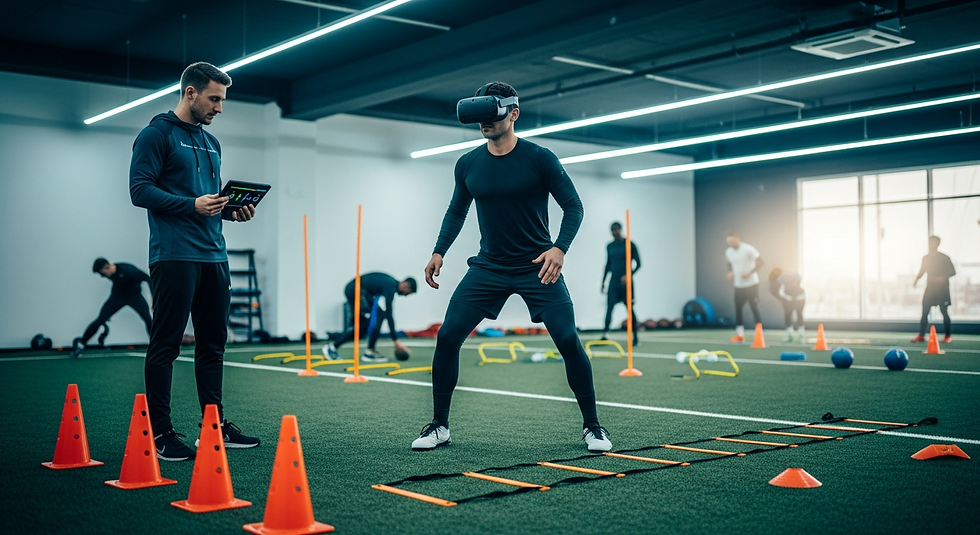
This matters most in programs where staff must manage many athletes at once. Real-time athlete tracking can highlight acceleration changes, repeated movement faults, or workload spikes. Virtual setups can then recreate the exact decision or movement sequence so the athlete gets targeted repetition instead of generic feedback.
Core Benefits for Coaches and Academies
The strongest benefit is consistency. AI systems can standardize measurement across age groups, sessions, and staff changes. A coach can see whether a cue improved sprint mechanics, whether a goalkeeper reacted earlier to a visual trigger, or whether a basketball player is making better reads under pressure.
A second benefit is personalization. Two athletes may complete the same drill but need very different next steps. One may need hip mobility work, another may need scanning cues, and another may simply need more repetitions at higher game speed. AI helps separate these needs so training feels more specific and less one-size-fits-all.
A third benefit is scalability. Academies can use reliable virtual training setups to deliver consistent drills across locations. Senior coaches can design the method, while local staff use the platform to run, measure, and refine sessions with less guesswork.
Use Cases Across Team and Sponsor Settings
In performance training, AI systems can support movement screening, tactical rehearsal, skill acquisition, and injury-risk monitoring. A football club might simulate pressing triggers. A tennis academy might compare swing mechanics under fatigue. A basketball program might test how quickly players recognize defensive rotations.
The same technology can extend beyond coaching. Athlete digital doubles can support education, remote instruction, and sponsor storytelling. A performance lab can become a fan-facing experience when paired with immersive sports advertising, letting supporters understand what elite training feels like instead of only watching finished highlights.
Data and Technology Requirements
A useful AI training stack starts with clear questions. Do you want to improve decision speed, reduce injury risk, measure technical consistency, or prepare athletes for a specific tactical model? The answer shapes the data you collect and the technology you need. Mimic Sports' technology stack includes 3D scanning, real-time engines, avatar systems, cloud delivery, and simulation workflows that can be adapted to those goals.
Teams should also decide what will be measured before they buy tools. Common inputs include video, positional data, force or workload signals, mobility screens, and coach ratings. Common outputs include readiness scores, movement flags, decision-speed trends, and drill recommendations. The output must be simple enough for staff to use during a busy training week.

How to Implement an AI Training Pilot
Start with one team, one performance question, and one training block. For example, an academy might run an eight-week pilot focused on first-step acceleration and defensive scanning. Staff can capture baseline data, run virtual drills twice per week, and review progress through a small set of metrics.
The pilot should include coach feedback, athlete feedback, and operational feedback. Coaches need to know whether the system improves decisions. Athletes need to trust that the system helps them, not just monitors them. Operations staff need to know whether setup time, data review, and maintenance are realistic.
Load management should be part of the design from day one. AI can help identify fatigue patterns, but it should complement medical and coaching judgment. For a deeper look at this theme, Mimic Sports has also explored injury prevention and load management in virtual training environments.
Mistakes to Avoid Before Launch
The first mistake is collecting too much data with no coaching question. More sensors do not automatically create better training. The second mistake is treating AI recommendations as final answers. Staff should treat them as signals to investigate, compare, and test.
The third mistake is ignoring athlete experience. If a system feels punitive, confusing, or slow, athletes will resist it. The fourth mistake is skipping content design. Virtual drills need realistic environments, believable cues, and clear progression. Simulation quality matters because athletes learn from what the environment asks them to notice.
KPIs That Show Training Impact
Useful KPIs include reaction time, decision accuracy, technical repeatability, workload tolerance, session completion, recovery trends, and transfer into live performance. For commercial programs, teams may also measure sponsor engagement, fan participation, or remote coaching usage.
The most convincing results connect training data to human outcomes. If athlete digital twins help explain a movement pattern, the win is not the digital twin itself. The win is a coach, athlete, or fan understanding performance more clearly.

Responsible AI and Athlete Trust
Athlete data is personal. Teams should be transparent about what is captured, who can access it, how long it is kept, and how it influences selection, medical decisions, or development plans. Responsible AI in sport depends on consent, context, and human review.
Trust also improves adoption. When athletes understand that the system helps them train smarter and protects their long-term development, they are more likely to engage honestly. The technology should make coaching conversations better, not colder.
Future Trends in AI Sports Training
The next wave will blend live simulation, generative scenario design, multilingual coaching avatars, and connected fan experiences. Teams will be able to build training worlds that mirror upcoming opponents, adapt drill difficulty automatically, and let athletes review their own digital performance from multiple angles.
This is where Mimic Sports is especially well positioned. Its work across simulations, avatars, and immersive content gives teams a bridge between performance technology and audience experience. To explore a custom training or engagement pilot, teams can contact Mimic Sports with a specific performance challenge.
FAQ
Q: Are AI sports training systems only for elite teams? A: No. Elite teams may use deeper integrations, but academies and smaller programs can start with focused pilots such as decision-speed training, movement analysis, or virtual drill libraries.
Q: Can AI replace coaches? A: No. AI can organize patterns and speed up feedback, but coaches still interpret context, motivate athletes, and make final development decisions.
Q: What data does a team need first? A: Start with the data tied to one coaching question. Video and simple performance metrics are often enough for an initial pilot before adding more sensors.
Q: How long should a pilot run? A: Six to eight weeks is usually enough to test setup, athlete adoption, and early performance trends without overcommitting budget.
Conclusion
AI sports training systems work best when they serve a clear coaching goal. The technology should help staff see patterns sooner, help athletes understand progress more clearly, and help organizations scale their training method across teams and locations.
For teams and academies ready to modernize training, the practical path is focused: choose one performance question, build a pilot around it, measure what changes, and expand only when the workflow proves useful. That approach turns AI from a buzzword into a repeatable training advantage.

Comments